
Mount Olive Resident Lookup Evidence
Mount Olive Township has no single official household directory. So a Mount Olive resident lookup works best when you name the exact question first. Voter rolls, vital records, and old street directories each answer narrower questions. Each runs under its own rules. For owner and parcel questions, the Morris County Tax Board search ties an assessed owner to a parcel. It covers a given tax year. New Jersey Courts case-search routes can tie a named party to a case. Whatever the source, keep its date and record category attached to each result.
| Record layer | What it can confirm | Mount Olive route | Access boundary |
|---|---|---|---|
| Property and deed record | Assessed or titled owner, parcel, mailing address, and instrument date | Tax Board, Morris GIS Parcel Searcher, and County Clerk | Public index; owner is not necessarily occupant |
| Registration record | Individual registration status when lawfully checked | NJ registration check and Morris County elections | Self-check differs from a regulated voter-file copy |
| Court case metadata | Named party, venue, docket, caption, and initiation date | Civil Case Jacket, NJMCDirect, or court custodian | Restricted matters and document text can be unavailable |
| Vital record route | Eligible certified or genealogical record request | Mount Olive Registrar, OVS, or State Archives | Current certificates are not an unrestricted name search |
| Credential record | License type and status when checked | NJ Consumer Affairs verification | Does not establish a home address or biography |
Start with the most reproducible key. An address usually leads to a parcel and block/lot. A full name with a middle initial can open court metadata. A historical name may need a library city directory or the county Archives instead. Label any result built on a mailing address, former name, or old directory edition exactly that way. It earns more weight only when two independent identifiers agree.
Mount Olive Court Record Checks
Superior Court and municipal court run as separate Mount Olive resident lookup channels. The Civil Case Jacket interface takes a party search for an individual or a business. Individual searches use last name, first name, and an optional middle initial. A docket search instead uses county, docket type, docket number, and docket year. Each result row can show the party name, venue, docket number, and caption. It can also show the date the case began. A CAPTCHA step is part of the public route.
| Search field | Use and result limit |
|---|---|
| Last, first, middle initial | Use exact spelling and test a known variant before treating similar names as one person. |
| County and docket fields | Narrow a case to its venue, case type, number, and year. |
| Case result row | Supplies party, venue, docket, caption, and initiation date, not a complete narrative file. |
| Mount Olive Municipal Court | Local sessions are Monday at 3 p.m.; NJMCDirect is a case and payment adjunct, not a local name roster. |
The criminal PROMIS/Gavel route sits behind a CAPTCHA boundary and shows limited public information. Family, juvenile, domestic-violence, sealed, and expunged matters simply never appear as resident lookup results. Some paper-only matters never appear either. Ask the court or the custodian directly for a certified disposition when the outcome matters. The official PROMIS/Gavel access screen shows why a CAPTCHA or limited display is a real access boundary. It is not a missing-person conclusion.
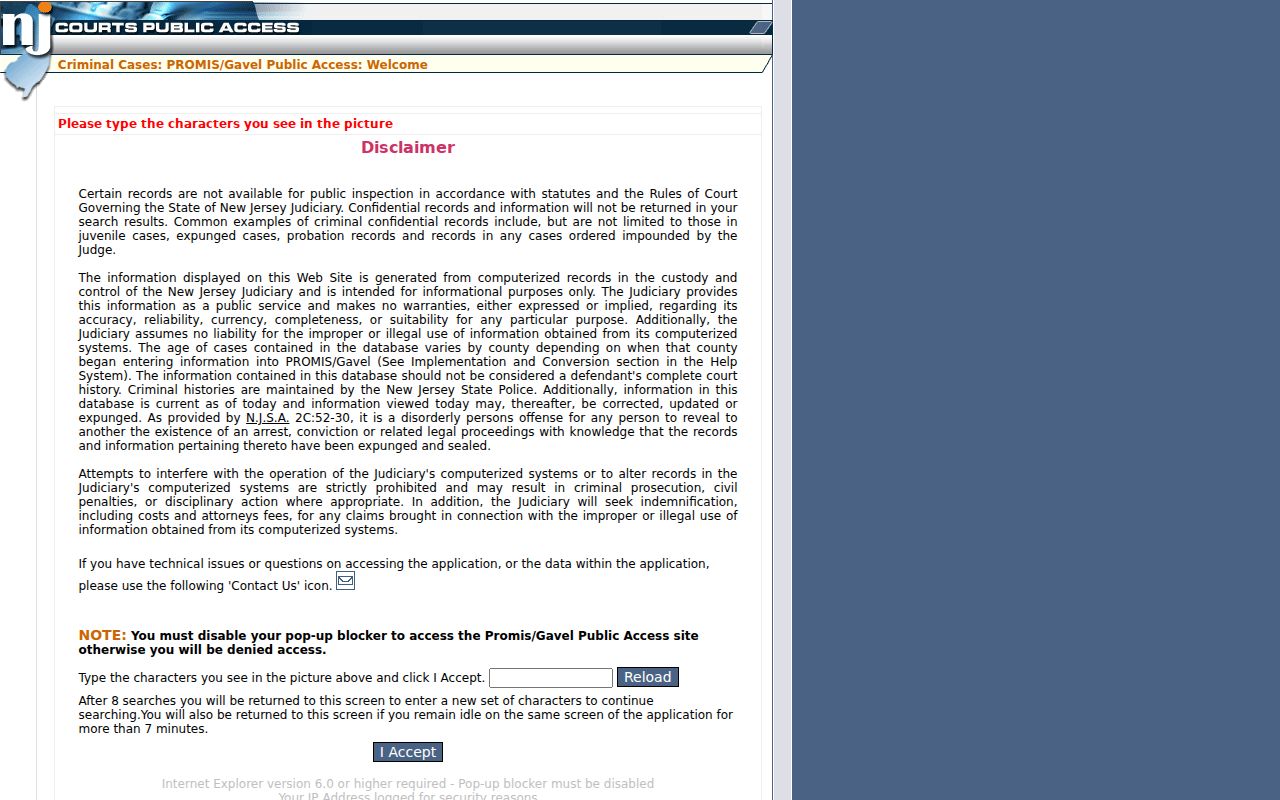
Take the public route first. Find the right custodian, note the docket context, and keep the access limit attached to whatever the Mount Olive court record check returns.
Mount Olive Docket Status
Court records have their own vocabulary. A Mount Olive resident lookup depends on reading that vocabulary correctly. A complaint is only an allegation. An initiation date is not a hearing date. A party row is not a judgment. Likewise, a payment screen is not a final disposition. The public docket can still carry case metadata, document lists, proceedings, dispositions, litigant status, and attorneys. The text or image of a filing may stay withheld even then.
Match at least two independent details before you trust a hit. County, middle initial, date, party role, property reference, or caption all work well. In a Mount Olive property dispute, compare the venue and caption against the block/lot. Compare those against the recorded deed chain as well. If a result cannot be separated from another person bearing the same name, leave it unresolved.
Verify a Mount Olive Resident Lookup
A careful Mount Olive resident lookup builds an evidence chain. It never merges every matching name. Begin with the least sensitive official record that answers your question. Property rolls establish an assessed owner or recorded party. Voter rolls, vital records, and court files each carry their own definitions and restrictions. Before moving to the next source, take notes. Record the date, the jurisdiction, the spelling you searched, and what each field actually means.
- Search the Tax Board or GIS by the known address, owner name, or parcel key. Save the tax year, district, block/lot, and whether the returned address is situs or mailing.
- Check the County Clerk party or instrument index when a recorded property connection is relevant. The party format is last name then first name without a comma.
- Run the court party search with the full name and a middle initial when known. Compare venue, date, and party role rather than relying on the name alone.
- Use the appropriate vital, voter, library, or custodian route only for the access level allowed. Obtain a certified record from its custodian when an official certified copy is needed.
- Docket
- A court’s identifying number for a case, used with the venue and case type to locate its record.
- Index versus image
- An index is a searchable set of fields. An image is the scanned underlying record, which can be restricted, absent, or obtained through another access channel.
- Certified copy
- A custodian-issued copy authenticated for the purpose the custodian permits. It is different from a portal result or an ordinary printout.
The Clerk's online property index reaches back to 1960. For older instruments, watermarked-free images, books, microfilm, or certified copies, turn to the Morris County Records Vault. A mail request should include a description, the book/page when known, and a return address. Add a check or money order as well. The Vault also offers an in-person channel, so a portal that returns nothing does not end the record trail. The Clerk's free Property Alert Service can email you. It sends word when a selected name or municipality/block/lot has a new recorded document. Treat any alert as a prompt to inspect the instrument itself. An alert alone proves neither fraud nor ownership.
Mount Olive Vital Record Boundaries
A name in a ledger is one thing. A current certificate is another. New Jersey opens birth records to genealogists after 80 years, marriage records after 50, and death records after 40. Before those thresholds, a known name alone does not make a record public. The Mount Olive registrar, the New Jersey Office of Vital Statistics and Registry, and the New Jersey State Archives each cover different date ranges and eligibility paths, so the right office depends on the record and the year.
Local requests in Mount Olive work by appointment. You bring identification, proof of eligibility, and payment for the transaction. State forms ask for the subject's identity, the record type, the date and place of the event, your relationship or eligibility, and a certification choice. For older material, the New Jersey State Archives genealogical collections are the proper archival channel. Treat a genealogy index or a no-record response as a research clue, never as a statement about a living person.
Mount Olive Resident Lookup Credentials
A professional credential tells you a named person's license category and current status. It proves nothing about where someone lives. For a Mount Olive resident lookup, treat it as one data point only. New Jersey's Division of Consumer Affairs lets you pick a license type. You can then choose between Business Search and Person Search. Choose the exact credential type. Record the date you checked. Keep the status wording the system returned. New Jersey's license-verification screen displays both routes. It also shows the license-type menu used in this kind of lookup.
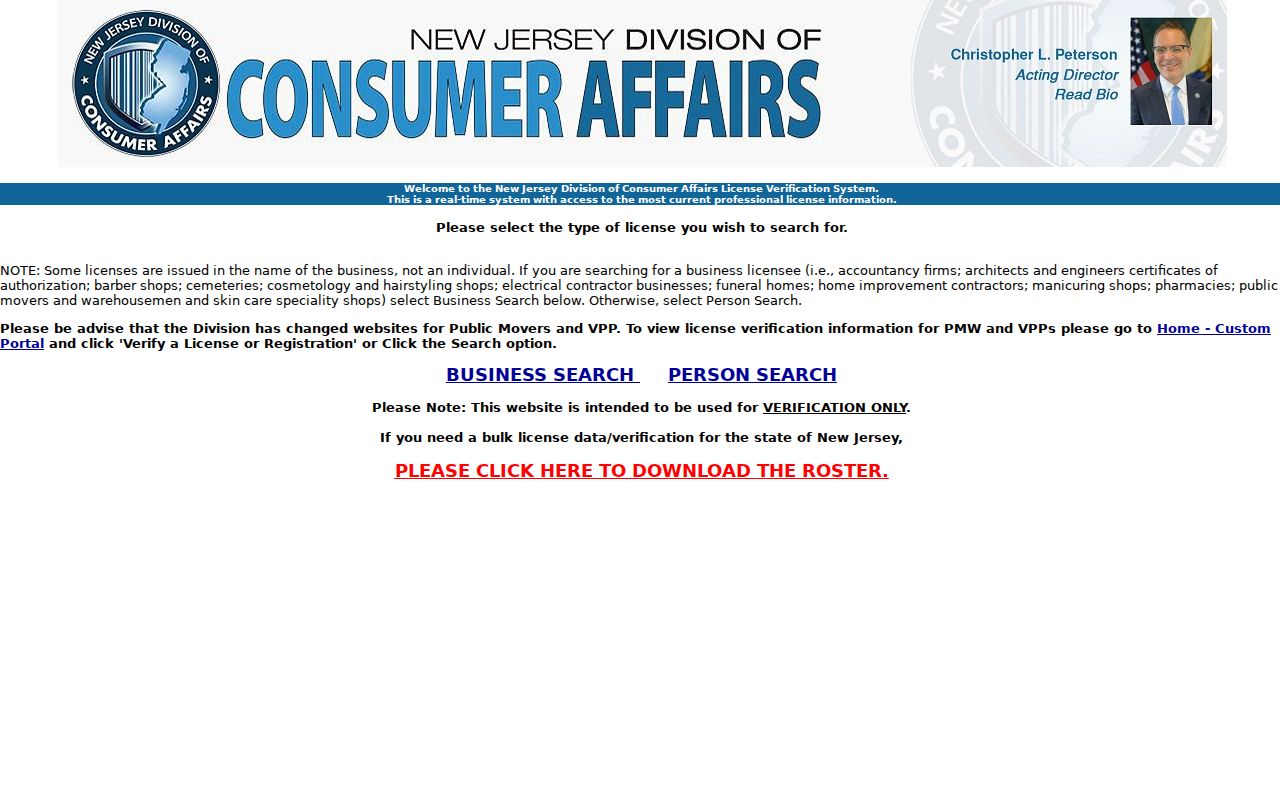
File the result in a labeled source trail. It is not proof of residency, quality, or activity beyond the stated status.
Mount Olive Resident Lookup State Custody
The NJ Department of Corrections Offender Information search covers state custody only. A result may include aliases, case or order details, county, facility, release or parole data, sentence history, custody dates, descriptors, and offense fields. It is not a Mount Olive resident finder. County and federal custody fall outside its reach. An empty result cannot show that a person has no record or lives in Mount Olive. The official state-custody search page spells out the limits of this separate system.
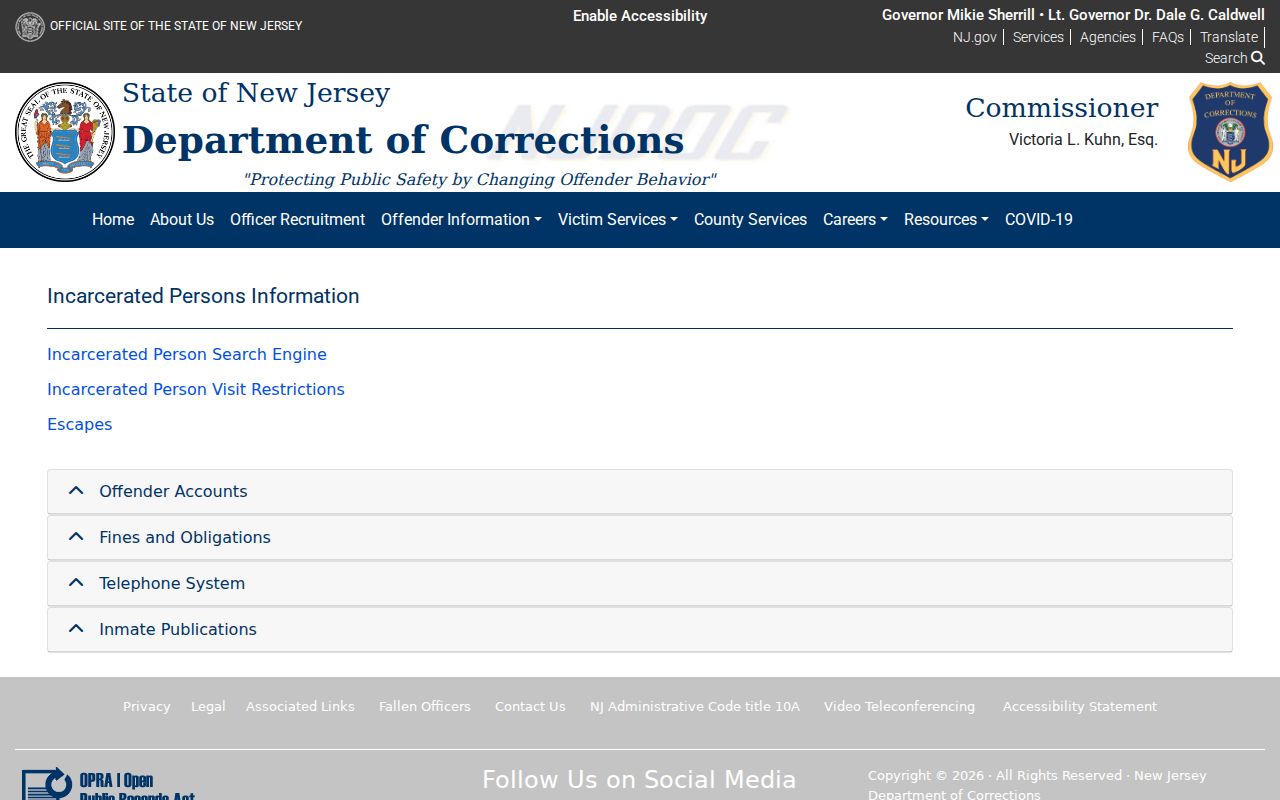
Keep each result inside its own custodial scope. A deed, a court file, and a voter roll answer different questions, so none of them alone proves current residency in Mount Olive.
Mount Olive Name Match Myth
A name match alone never identifies a Mount Olive resident. The same name can carry a middle initial. It can carry a married or former name, a nickname, a business role, or a village abbreviation. Context decides the answer. Property rolls may show only a title holder or mailing address. A court record may list a party, an old street directory may hold a dated listing, and voter records carry statutory access limits. Those labels matter far more than a broad search hit.
When records conflict, keep both dates and both definitions. A Hackettstown postal label can sit on a Mount Olive parcel. An older Flanders or Roxbury reference can be historically correct too. The conflict may be postal, historical, or custodial, not proof of two different people.
Mount Olive OPRA Record Requests
When the record you need is not in an official search, ask the custodian who holds it. New Jersey's Open Public Records Act, N.J.S.A. 47:1A-1 et seq., as amended by P.L.2024, c.16, gives access to existing records. It does not force an agency to build a new resident list. Describe the known record, its date span, and the format you want. The stated response period for a current, readily available record is seven business days. However, lawful extensions, exemptions, and redactions can apply.
The Government Records Council's OPRA materials list ordinary copy fees of $0.05 per letter-size page and $0.07 per legal-size page. Other actual, special-service, delivery, or postage costs are also possible. Send a narrow, well-described request to the custodian that owns the record. That could be the Township Clerk, County Clerk, a court, or a state agency. A redacted copy, an inspection, or a denial explanation still counts as a result. A referral to another office does too.
Note: Keep the request date, custodian, record description, response, and any redaction explanation in your notes.
Limits on Mount Olive Resident Lookup
New Jersey law separates records you can access. Other information must be withheld, redacted, or routed through a custodian. OPRA can require redaction of personal identifiers. It can also shield protected investigative, juvenile, medical, victim, and security-sensitive material. The NJ Address Confidentiality Program gives qualifying participants a legal substitute address with mail forwarding. Voter law adds statutory street-address nondisclosure for covered people. Never reverse a substitute address to find a protected location.
Lawful use. Use Mount Olive resident lookup results for personal, lawful research and source verification. Never use a record to stalk, harass, intimidate, or expose someone with a protected address.
Correction and safety requests go to the source custodian. Identify the exact record or URL, explain the error or safety issue, and share only what the agency needs to judge the request. A current display can be corrected or redacted even when an archival record follows a different rule.